
Power Hardware
in the Loop (P-HIL)
Power Hardware in the Loop Testing for Real-Time Validation
Power hardware in the loop testing combines real hardware with a real-time simulated environment in a closed-loop system. It enables realistic validation of modern energy systems without the need for complex and costly full-scale setups. Engineers use this method to accelerate development, reduce testing risk, and validate system behavior under controlled conditions. Iterations can be executed faster, allowing efficient
optimization of system performance early in the development process. Typical applications include power electronics, smart grids, energy storage, electric vehicles, and emerging technologies such as batteries and fuel cells. Even critical scenarios such as overload conditions or grid disturbances can be reproduced safely in the laboratory.
Power Hardware in the Loop at a Glance
- Goal: Realistic testing of power hardware within a simulated electrical system under real-time conditions
- Core principle: Closed-loop interaction between a real-time simulator, power amplifier, and physical hardware
- Typical use cases: Validation of power electronics, smart grids, energy storage systems, and electric vehicles
- Benefits: Faster development cycles, fewer late-stage surprises, and the confidence that your hardware performs exactly as designed — before it ever hits the field.
Power Hardware in the Loop: Definition, Benefits and Functional Principle
Power hardware in the loop (P-HIL) is a testing method where physical hardware interacts with a simulated electrical system in real time within a closed-loop environment. A real-time simulator generates the system behavior, which is applied to the hardware via a power interface and continuously fed back into the simulation. In practice, power hardware in the loop is used to test converters, inverters, chargers, battery systems, fuel cells, and other energy-related components against simulated environments such as smart grids or energy storage systems.
This enables detailed analysis of dynamic behavior, system stability, and response to changing loads or grid conditions. Compared to conventional testing, P-HIL allows faster iteration cycles and more efficient validation. Engineers can modify parameters, repeat tests, and evaluate system responses in real time without rebuilding physical test setups.
Why Power Hardware in the Loop Testing Matters
Modern energy systems are highly dynamic and interconnected. Power hardware in the loop testing provides a reliable way to validate these systems under real-time operation while reducing risk and complexity. For example, demanding drive cycles, regenerative braking events, or peak torque overload scenarios can be reproduced in a controlled laboratory environment.
This enables detailed analysis of each component such as battery, inverter, and motor, either in isolation or as part of a complete system.
Engineers can evaluate transient behavior, system interactions, and control stability without exposing hardware to uncontrolled road or field environments. As a result, power hardware in the loop improves test repeatability, shortens development cycles, and supports more efficient validation processes.
How Power Hardware in the Loop Works
A power hardware in the loop setup consists of a real-time simulator, a power amplifier, and the hardware under test. These components interact continuously to form a closed-loop system that reflects real operating conditions.
- Real-time simulator: Simulates the electrical environment, such as grid behavior or load profiles, in real time, additionally
- Power amplifier: Converts simulation signals into real electrical power with high precision and fast response
- Hardware under test: Responds to the applied signals, with its behavior fed back into the simulation loop
This closed-loop interaction ensures that both the simulated system and the physical hardware influence each other, enabling realistic and high-fidelity testing.

Applications of Power Hardware in the Loop
Renewable Energy Systems
Power hardware in the loop is widely used to validate photovoltaic inverters and wind power systems under realistic grid conditions. Instead of relying on field tests, engineers can simulate the solar arrays, power output of a wind generator, grid voltage variations, frequency changes, and unstable operating conditions in a controlled environment.
This enables detailed analysis of inverter control behavior, dynamic response, and grid compliance. Critical scenarios such as weak grids or fluctuating renewable input can be reproduced consistently, allowing reliable validation before deployment.
Smart Grids
In smart grid applications, power hardware in the loop testing allows simulation of complex and decentralized energy systems. Distributed energy resources such as solar systems, storage units, and loads can be combined into a virtual grid environment.
Engineers can evaluate how individual components interact within the grid, including load changes, fault conditions, vulnerabilities, and system-level dynamics. This is essential for validating control strategies, grid stability, security, and interoperability between multiple devices.
Energy Storage Systems
Power hardware in the loop enables controlled testing of battery and energy storage systems under dynamic charge and discharge conditions. Instead of using real batteries, simulated environments can reproduce different states of charge, load profiles, and grid interactions.
This allows engineers to analyze efficiency, response time, and system behavior under varying operating conditions. It is particularly useful for validating converters and storage interfaces in grid-connected or hybrid energy systems.
Electric Vehicles
Power electronics hardware in the loop is commonly used for testing electric vehicle components such as chargers, inverters, and traction systems. Real-time simulation enables the reproduction of driving conditions, load cycles, and energy flows without requiring a full vehicle setup.
Engineers can evaluate system performance during acceleration, regenerative braking, and varying load conditions. This supports reliable validation of efficiency, control strategies, and overall system dynamics in EV applications.
Why REGATRON for Power Hardware in the Loop
High Precision and Fast Response
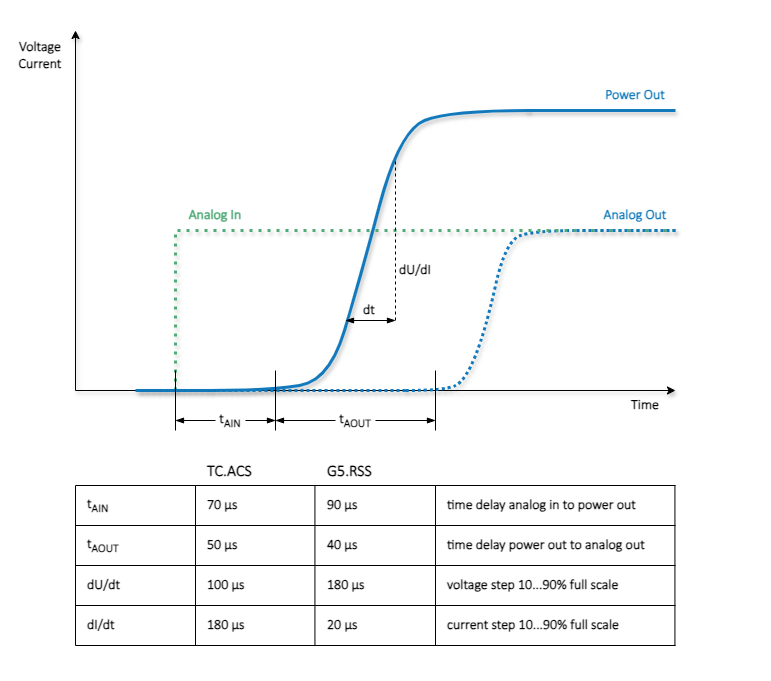
In power hardware in the loop testing, the accuracy of the power interface directly determines the quality of the results. REGATRON systems provide highly precise voltage and current control combined with fast dynamic response, ensuring that simulated signals are reproduced without distortion or delay. This is essential for analyzing transient behavior, control stability, and rapid load changes in applications such as smart grids or electric traction systems.
Regenerative Operation
Power hardware in the loop testing often involves continuous energy exchange between the system under test and the power source. REGATRON’s regenerative technology allows energy to be fed back into the grid instead of being dissipated as heat. This significantly reduces operational costs and improves overall system efficiency, especially in long-duration or high-power test scenarios.
Scalable Power Range
REGATRON solutions cover a wide power range from laboratory setups in the kW range up to large-scale MW installations. This enables flexible implementation of power hardware in the loop setups across different application fields and power levels. Engineers can use the same technology platform from early-stage development to full system validation without changing the test approach.
Robustness and Reliability
Stable operation is critical in power hardware in the loop environments where tests often run continuously under demanding conditions. REGATRON systems are designed for high reliability and robust performance, ensuring consistent and repeatable results over time.
Suitable Products

G5.RSS Series
The G5.RSS series integrates Regatron’s cutting-edge technology in a compact, space-saving design. It features rapid transient response (50…100 µs), ripple modulation up to 10 kHz, and high-precision current and voltage regulation. Its switchable output capacitance ensures stability and maximum dynamic response in both CV and CC modes. Ideally suited for a wide range of demanding laboratory and industrial applications, including testing compliant with automotive and industry standards EIS, P-HIL, and more.
- Power Range: 0…9 to 0…5000+ kW
- Voltage Range: 0…60 to 0…3000 VDC
G5.UNV Series
Comprehensive solution for testing / simulation of batteries and fuel cells, testing of (solar) inverters and chargers, and P-HIL applications. It incorporates the advanced functions of the specialized G5 series and is designed to meet diverse requirements in an environment of constantly evolving tasks in areas such as product certification, scientific laboratories, R&D, and prototyping.
- Power Range: 0…9 to 0…5000+ kW
- Voltage Range: 0…60 to 0…3000 VDC
Three-Phase Power Amplifier
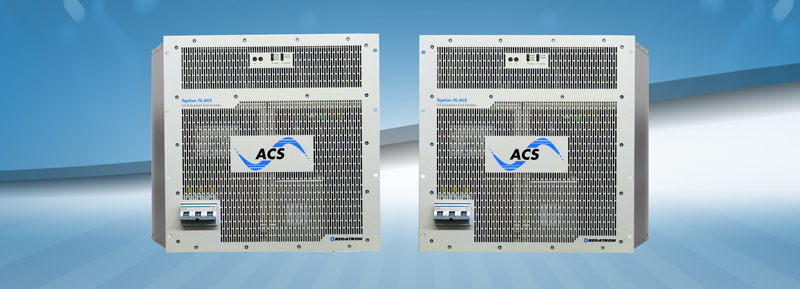
The TC.ACS series can be used as power amplifier, featuring different operating modes (CV / CC), an analog high-speed interface, and an optional digital high-speed interface based on the Aurora protocol. The fast response capability of TC.ACS provides minimum time delays and phase errors, making it ideally suited as P-HIL-amplifier for power hardware-in-the-loop simulation.
- Power Range: 0…30 to 0…2000+ kVA
- Voltage Range: 0…528 Vrms (L-L)
(higher on request)
We Are Here to Support You
Experience our commitment to outstanding customer support at every stage — before, during, and after your purchase. Benefit from our complimentary consultation services from the very beginning to ensure the ideal solution for your needs.
For added flexibility, selected power supplies may also be available for rent. Please contact REGATRON to discuss your specific requirements and to check availability for your application.
Need the Right Power Solution?
We’ll help you define the ideal setup.
Contact us today for expert, personalized support.